
Wine Glassware: Does the Shape Actually Matter?

A Sip and Study Guide to Debunking Myths and Choosing Your First Real Set
There is a moment, usually early on, when you notice that wine glasses are not all the same. Some are wide and rounded. Others are tall and narrow. Some feel elegant and precise, while others feel more casual and familiar. It is natural to wonder if any of it really matters.
We have all been there, standing in front of a shelf of glassware, wondering why one glass looks like a fishbowl while another is shaped like a narrow flute. It can feel like unnecessary complexity. Does wine really need all of this.
The answer is yes, but not in the way it is often presented.
Glass shape does influence how a wine smells and feels, but you do not need a different glass for every variety to enjoy wine well. A few simple principles will take you much further than an entire cabinet of specialized stems.
The Science of the Sip
The first thing a glass affects is aroma. A wider bowl gives the wine more surface area, allowing it to interact with air and release its aromas. Fruit, floral, and spice notes become easier to notice. A gently tapered rim then helps concentrate those aromas, guiding them toward your nose in a more focused way.

Shape also influences how the wine feels on your palate. The width of the rim and the curve of the glass affect how the wine flows when you take a sip. A narrower opening can make acidity feel more precise, while a broader opening allows fuller wines to spread across the palate, creating a rounder, softer impression.

Temperature plays a role as well. Smaller glasses help keep white wines cooler for longer, while larger bowls allow red wines to open up at a slightly warmer temperature. These are subtle shifts, but together they shape how the wine is experienced.
Debunking Glassware Myths
One of the most common ideas is that you need a different glass for every grape variety. While specialized glassware does exist, it is not necessary for most people. A small, thoughtful set will serve you far better than an overwhelming collection.
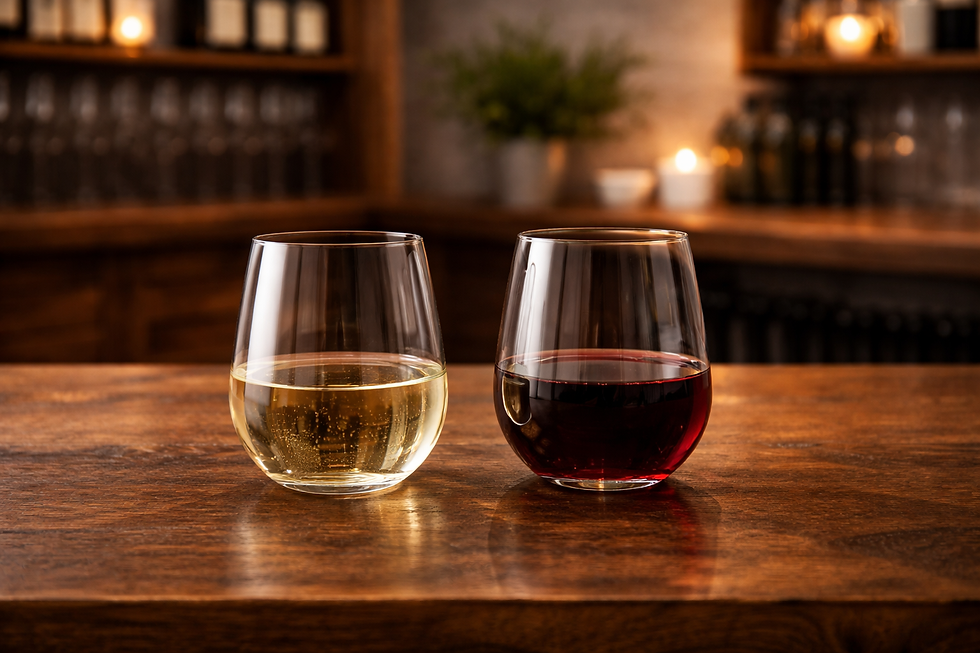
Another common belief is that stemless glasses are somehow incorrect. In reality, they are perfectly fine for casual settings. The only consideration is temperature. Holding the bowl warms the wine more quickly, which can change how it tastes over time. For a more focused tasting experience, a stem allows you to hold the glass without affecting the wine.
Choosing Your First Real Set
If you are beginning to build your own glassware, simplicity is the best place to start. You do not need perfection. You need versatility.
A single universal glass is often the easiest and most practical choice. It has enough bowl space to allow aromas to develop, with a shape that works well for both red and white wines.

If you would like to expand slightly, a two or three glass approach offers a bit more flexibility. A medium-sized glass for everyday use, a larger bowl for fuller reds, and a tulip-shaped glass for sparkling wines will comfortably cover most situations.
What matters most is how the glass feels to use. It should be balanced, comfortable to hold, and invite you to slow down and notice what is in your glass.
Savor the Experience
Wine glassware is not about perfection or performance. It is about support. The right glass does not change the wine. It helps you experience more of what is already there.
Wine education should always feel like an invitation, not a set of rules. If you enjoy your wine in a simple glass, that is enough. If you are curious to explore further, the right stemware becomes a tool that enhances that curiosity.
The goal is not to collect more things. It is to experience wine more fully.
Sip. Study. Savor.


Comments